A Designer’s Look at Soccer Football Sport Activity Clipart
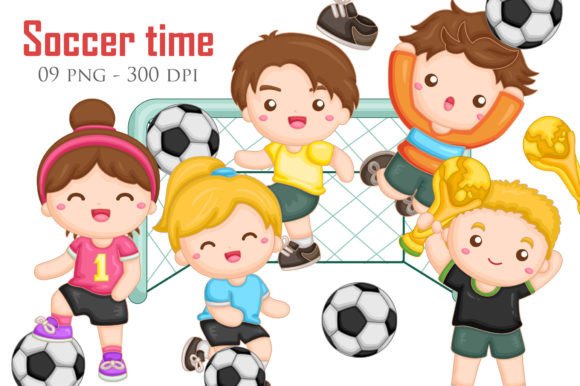
I have spent years turning digital artwork into stitched products that real people actually wear, gift, and sell. When a set like Soccer Football Sport Activity Clipart lands on my desk, I do not just glance at the preview and move on. I think about fabric, thread, stabilizer, and whether the final stitched piece will make someone smile. This set offers nine design elements, and the first thing I notice is how much personality each one carries. The mood is playful, energetic, and unmistakably sporty. It feels like a Saturday morning on the soccer field, complete with the kind of movement and charm that works beautifully on children’s apparel, team gifts, and boutique merchandise.
The shapes are clean enough to translate into embroidery without losing their identity. That matters more than most people realize. A design that looks great on a screen can become a muddy mess under thread if the outlines are too thin or the negative space collapses. What I see here are silhouettes and motifs that hold their own. The theme reads clearly even at a glance, which is exactly what you want when stitching on a cap, a tote bag, or a toddler’s sweatshirt. Customers do not squint at embroidery. They react in a split second. This set is built for that kind of recognition.
First Impressions of the Nine Design Elements
The set lives in the Illustrations category and is listed as a Graphics product type. That means it arrives as digital clipart, not as a pre-digitized embroidery file. For anyone who regularly works with machine embroidery, that is not a dealbreaker. It is simply a starting point. I often prefer a well-drawn graphic over a poorly auto-digitized file anyway. The linework here is purposeful, and the nine elements offer enough variety to build a small collection of themed products without feeling repetitive. A soccer ball, action poses, sports equipment accents, and energetic silhouettes give you range. One piece might work as a focal point on a pillow cover, while another could sit quietly as a corner accent on a tea towel.
The mood is friendly and inclusive. It does not skew too masculine or too feminine. It feels like it belongs in a family-oriented craft business, a youth sports fundraiser, or a personalized gift shop. When I imagine these designs stitched out, I see them on a child’s backpack, a coach’s apron, or a set of matching patches for a team celebration. That versatility is the kind of thing that keeps a small shop owner coming back to the same design set season after season.
Where This Clipart Shines in Embroidery Projects
If I were planning a product line around Soccer Football Sport Activity Clipart, I would lead with custom apparel. A sweatshirt with one of the larger motifs centered on the chest would sell immediately at a craft fair. The shapes are bold enough to read well from a distance, and the theme taps into a universal love for the sport. Tote bags are another natural fit. A simple canvas tote with a single stitched design element feels thoughtful and handmade without being fussy. Parents love that kind of thing for carrying gear to practice.
Baby embroidery is a quiet but powerful niche for sport-themed designs. A tiny onesie with a soft soccer ball motif stitched in pastel thread can be a memorable baby shower gift. The key is scaling the design down to fit a small hoop size without losing clarity. I would test the smallest elements first on scrap fabric before committing to a delicate baby garment. The same goes for caps and hats. Curved surfaces demand designs that adapt well to a smaller stitch field. Not every graphic can handle that transition, but the simpler pieces in this set look promising.
Patches are another area where I see strong potential. An embroidered patch from one of these clipart elements could live on a denim jacket, a sports bag, or a commemorative keepsake. The graphic style lends itself to that slightly textured, stitched-down look that people associate with quality handmade products. When I run a small batch of patches for a client, I always check whether the design holds its personality at a reduced size. The cleaner the original graphic, the better the patch result. These nine elements start from a strong place.
Designing a Real Project Around the Soccer Theme
Here is a real scenario I played through while evaluating this set. A local boutique asked me to create a limited run of embroidered kitchen towels as thank-you gifts for a youth soccer tournament. The colors needed to match the team palette, and the design had to feel celebratory but not childish. I pulled up the clipart and started mentally assigning elements to towel corners. One of the simpler ball designs worked perfectly as a small accent. A more dynamic action pose became the hero piece on a coordinating apron. The result was a cohesive set that looked intentional and elevated. The boutique owner was thrilled, and the parents kept asking where they could buy more.
That kind of project is where Soccer Football Sport Activity Clipart truly earns its place in a designer’s library. It is not just about the individual images. It is about how they work together across multiple products, creating a brand-consistent look that customers recognize and trust. When a handmade shop can offer a matching apron, towel, and tote bag set, the perceived value jumps significantly. That is how you build repeat buyers.
Thread Choices, Fabric Texture, and Stitch Decisions
When I convert a graphic like this into an embroidery design, the first thing I think about is thread color. A soccer ball is not just black and white. It is shades of gray, off-white, and sometimes a hint of cream for depth. I would avoid pure white thread on a dark fabric background because it can look harsh and flat. A slightly warm white or a light gray gives the design more dimension. The same principle applies to the green grass accents or action lines. Subtle tonal shifts make a handmade product look expensive.
Fabric texture plays a huge role in how these designs read. On a smooth cotton tote, the satin stitch edges will look crisp and defined. On a textured knit sweatshirt, a fill stitch with a slightly lower density prevents the design from feeling stiff and uncomfortable against the body. I always test the stitch density on a fabric swatch that matches the final product. Too dense, and the embroidery puckers. Too loose, and the fabric shows through. The right balance depends on the stabilizer as well. A cutaway stabilizer gives lasting support on stretchy fabric, while a tearaway works fine on woven goods like aprons or pillow covers.
Placement, Scale, and Avoiding Common Embroidery Pitfalls
One of the biggest mistakes I see with sport-themed embroidery is placing the design too large on a curved surface. A cap has a limited flat area, and anything that wraps around the side seam will distort. For Soccer Football Sport Activity Clipart, I would choose the simpler, more compact elements for caps and use the larger, more detailed pieces for flat surfaces like the back of a jacket or the front of a tote bag. The same logic applies to baby items. A tiny sleeve cannot hold a complex scene. Scale the design down, test it, and then test it again on the actual garment.
Dark fabric background is another consideration. Some of the clipart elements may have fine lines or thin outlines that disappear against black or navy. I would test the design in a black-and-white mockup before stitching. If the details vanish, I adjust the contrast or add a subtle outline in a lighter thread color. That small step saves hours of frustration and wasted materials. It also keeps the finished product looking professional, which is what buyers expect from a handmade shop.
Commercial Use, Licensing, and Selling Finished Products
Before I place any design into a product I intend to sell, I check the licensing terms. This listing describes the set as digital clipart for greeting cards, scrapbooking, party invitations, decorations, and more. That tells me the original intent is paper-based and printable goods. To use these graphics in an embroidery product line, I would confirm whether the license allows for commercial embroidery, digital embroidery file conversion, and sale of finished physical products. Do not assume. Always verify with the seller. A quick message can protect your business from a costly mistake down the road.
For Etsy sellers and small shop owners, this kind of due diligence is part of the job. The same applies if you plan to sell the digitized embroidery file itself. Converting a graphic into a machine embroidery design and reselling it is a different type of use than stitching it onto a sweatshirt you sell. Know the difference, and get permission in writing if the terms are not explicitly stated. The design itself is charming and marketable. Make sure your usage rights match your business goals.
Small Details That Make a Big Difference in Stitching
When I examine each of the nine design elements, I pay attention to the small stuff. Thin lines that look elegant in a digital illustration can become a problem in embroidery if they fall below the minimum stitch width. Running stitch can handle finer details than satin stitch, but it has a different visual weight. I would likely convert the thinner lines to a single or double running stitch for stability, while keeping the bolder shapes in a satin stitch for that polished edge. The contrast between the two stitch types adds visual interest and texture to the finished piece.
The lettering, if any, is another area to watch. Small text in embroidery can close up and become illegible. If any of the clipart elements include tiny labels or numbers, I would test them at the intended size on a fabric scrap before committing to a full production run. Sometimes removing the text entirely and letting the image speak for itself is the smarter design choice. A clean, text-free motif often works better across a wider range of products and age groups.
From Clipart to Customer: The Buyer’s Experience
At the end of the day, my job is to create products that people feel good about buying and giving. A personalized gift made with Soccer Football Sport Activity Clipart has a built-in emotional hook. Soccer is a sport that millions of kids play, and parents treasure anything that celebrates that part of their child’s life. An embroidered pillow cover with a soccer motif becomes a bedroom keepsake. A stitched patch on a backpack becomes a daily reminder of a great season. Those emotional connections drive repeat sales and word-of-mouth referrals for a craft business.
The giftability factor is high. A set of embroidered tea towels with a soccer theme makes a thoughtful coach gift. A customized baby blanket with a soft stitched soccer ball is a unique baby shower present. These are the kinds of projects that turn a simple clipart set into a revenue stream. The key is thoughtful execution. Test the design, choose the right fabric and thread, and always check the final product with a critical eye before listing it in your shop.
Final Practical Notes for the Embroidery Designer
Before you load your hoop, take a few minutes to do the groundwork. Test the design on scrap fabric first. Check thread color contrast under natural light and under the kind of lighting your customer will see the product in. Review stitch density and adjust it based on the fabric texture you are using. Confirm your hoop size can accommodate the design with enough clearance for the stabilizer. Inspect every small detail after stitching, and if something looks off, tweak the digitizing before you produce a batch.
Test the design in a black-and-white mockup to see if the silhouette holds up without color. Compare light and dark fabric backgrounds to make sure the design reads well in both. Use the proper stabilizer for the fabric type, and do not skip a test wash on a sample piece. If the product is going to be washed frequently, like a sweatshirt or a kitchen towel, you need to know the embroidery holds up over time. These steps are not optional. They are what separate a professional finished product from a hobby attempt.
For those who sell digital embroidery files or printable mockups, this clipart set can serve as a strong design asset. Just make sure the final digitized file is your own original work derived from properly licensed graphics. The Illustrations category and Graphics product type tell me this was created with digital crafting in mind. The transition to embroidery is entirely possible with the right skill set and a solid understanding of stitch mechanics. I have seen graphic sets like this become the backbone of a profitable small shop product line when handled with care and respect for the original artwork.
In the end, Soccer Football Sport Activity Clipart offers a playful, versatile, and emotionally resonant set of design elements that can absolutely work in real embroidery projects. It suits custom apparel, tote bags, baby items, patches, caps, aprons, pillow covers, tea towels, and a wide range of personalized gifts. The nine pieces give you room to play, mix, and match across a cohesive theme. Take the time to test, digitize thoughtfully, and confirm your licensing, and this set can become a reliable workhorse in your creative arsenal.